


“Between stimulus and response there is a space. In that space is our power to choose our response.”
— Viktor Frankl
Let me set the scene.
I’m on stage, the lights are on, the audience is watching, and I’m fully in character… and then, without warning, my brain quietly packs its bags, files no handover notes, and leaves the building.
The line I’ve rehearsed a hundred times disappears...completely.
My co-actor is staring at me like I’ve grown a second head and I’m left saying something vaguely Shakespearean that makes absolutely no sense and definitely wasn’t in the script. It was not my finest moment.
Now, fast forward to a very different setting.
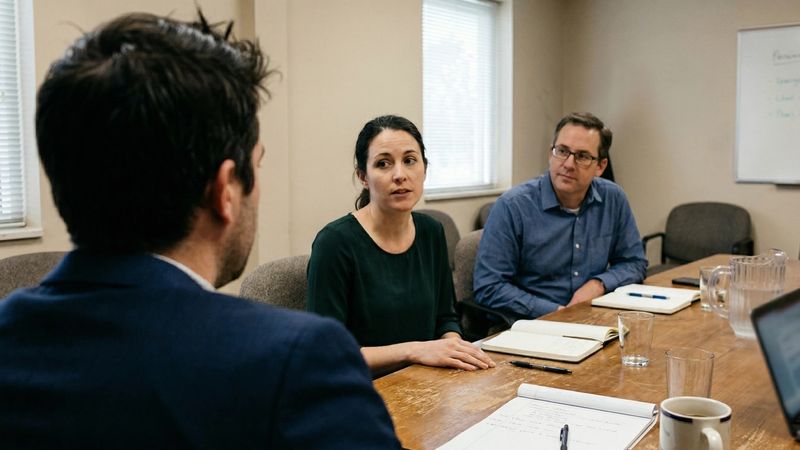
I’m in a practice session with a high-performing project manager. He’s smart, experienced, articulate and we’re working through how to deliver difficult feedback, and I ask, as calmly as possible.... “What would you say?”
He opens his mouth… and nothing comes out.
The look is instantly familiar. The same blankness, the same flicker of panic. His carefully thought-through response has vanished somewhere deep in his prefrontal cortex, presumably hiding alongside my missing stage line and if this has ever happened to you, you’ll recognise it immediately.
What’s interesting is that in both of these moments, the problem isn’t a lack of knowledge or capability, it’s something much more instinctive.
Under pressure your brain doesn’t register “conversation,” it registers “threat.” In response blood flow shifts away from the areas responsible for reasoning and language and towards survival mode, preparing you to fight, flee, or freeze. In that moment your brain isn’t trying to help you sound articulate, it’s trying to keep you safe.
That’s why words disappear! It’s why confident, capable people can suddenly struggle to form a sentence, not because they don’t know what to say but because their biology has temporarily decided that thinking clearly is not the priority.
Actors call it “losing the line.” Neuroscientists call it “fight, flight, or freeze.” Most people at work just call it “that meeting I’m still replaying at 3am.” Different language, same nervous system...
This is where Frankl’s quote becomes more than just something you see on a slide. A space between stimulus and response, however small it feels, is still there and it matters.
On stage, it might show up as a breath, or a quick glance at a fellow actor before continuing. At work, it might be as simple as saying, “Let me think about that for a moment,” instead of rushing to fill the silence.
One of my favourite moments came from a participant who froze, paused and then said exactly that. “I need a minute to think.” What followed was a calm, considered response that landed exactly as it needed to. The pause didn’t derail the conversation, it made it possible.
Which is why freezing isn’t failure. If anything, it’s often a sign that you care about getting it right.
The real skill isn’t having the perfect words instantly. It’s knowing how to create just enough space to access what you already know, even when the pressure is on.
So next time it happens, take a breath and trust the pause. Your thinking brain will catch up and if nothing else, you’ll almost certainly have a much better version of the answer later on.